
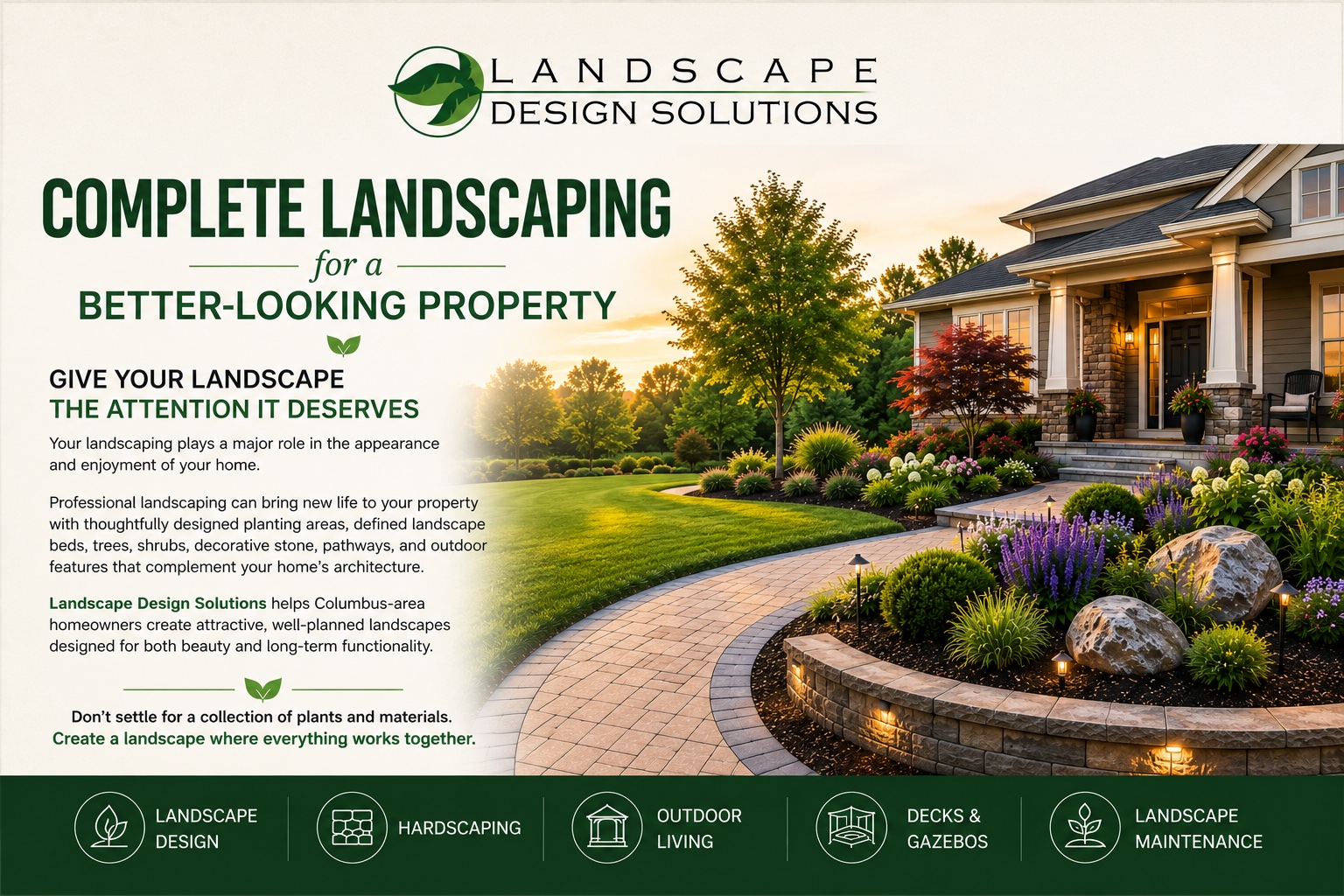
Transform Your Property with Professional Landscaping in Columbus, Ohio
A well-landscaped property does more than make a home look attractive from the street. It can change the way the entire property looks, feels, and functions.
Healthy lawns thoughtfully arranged planting beds, trees, shrubs, decorative stone, walkways, and hardscape features all contribute to the character of an outdoor space. When these elements are planned together, landscaping can create a stronger connection between the home and surrounding property while providing outdoor areas that are more enjoyable to use.
For homeowners throughout Columbus and Central Ohio, professional landscaping offers an opportunity to move beyond simply maintaining the yard and create an outdoor environment that feels complete.
At Landscape Design Solutions, the goal is to bring the individual pieces of a landscape together, so they complement the home, the property, and the way homeowners want to enjoy their outdoor spaces.
Professional Landscaping Is About More Than Curb Appeal
Curb appeal is often one of the first reasons homeowners consider updating their landscaping.
And understandably so.
Overgrown shrubs, undefined landscape beds, bare areas, aging materials, and an inconsistent mix of plants can make even a beautiful home appear dated.
Professional landscaping can dramatically improve that first impression, but appearance is only part of the equation.
A well-planned landscape can also improve how people move around the property, establish gathering areas, create privacy, define outdoor spaces, complement patios and walkways, and make the yard more enjoyable.
The objective isn't simply to make the property greener.
It's to make the entire outdoor environment work better.
Start With the Property as a Whole
One of the most common landscaping mistakes is approaching every part of the yard as an unrelated project.
A homeowner might replace the plants around the front entrance one year, install a walkway later, add a patio in the backyard, and eventually decide to incorporate new trees or hardscaping.
Individually, each project might look good. Together, however, they may not create a cohesive landscape.
Before making major landscaping improvements, consider the property as a whole:
How should the front landscape complement the architecture of the home?
Which areas should remain open for lawn, recreation, or pets?
Where could trees provide useful shade?
Which parts of the property would benefit from additional privacy?
How should walkways connect different outdoor areas?
Where might future patios, decks, gazebos, or other outdoor features be located?
Thinking about these relationships early can help create a much stronger finished landscape while also making it easier to accommodate future improvements.
Give Landscape Beds Definition and Purpose
Landscape beds provide an opportunity to introduce color, texture, depth, and visual interest around a home.
They can frame the front entrance, soften the foundation, border walkways, surround patios, or establish transitions between lawn and hardscape areas.
But effective landscape beds aren't simply empty areas that need to be filled with plants.
Their shape, scale, location, and plant selection should contribute to the larger design.
Defined borders can provide a clean appearance, while combinations of shrubs, perennials, ornamental grasses, and other plant materials can create layers of height and texture.
The result should complement the home without overwhelming it.
Select Trees and Shrubs with the Future in Mind
Young plants can be deceiving.
A tree or shrub that fits perfectly into a space today may look completely different after several years of growth.
That's why mature size is an important consideration when planning a landscape.
Trees can become valuable long-term features, providing shade, structure, seasonal interest, and visual impact. Shrubs can create privacy, define spaces, soften architecture, and provide attractive transitions throughout the property.
Proper placement allows plants room to mature while helping prevent overcrowding and excessive maintenance later.
Professional landscaping isn't just about how a property looks immediately after installation.
It's about how the landscape develops over time.
Use Decorative Stone to Add Texture
Plants don't have to provide all the visual interest in a landscape.
Decorative stone can introduce additional texture and contrast while helping define planting areas and other outdoor features.
Stone can work especially well around landscape beds, pathways, drainage areas, retaining features, and transitions between different materials.
The key is restraint.
Using too many unrelated materials can make a property feel visually busy. Selecting stone that complements the home's architecture and surrounding hardscape materials creates a more unified appearance.
Connect the Property with Walkways
Walkways are practical, but they can also become important design elements.
A thoughtfully designed walkway can create a welcoming approach to the front entrance, connect the driveway with the backyard, lead guests toward a patio, or provide a comfortable route through a garden.
Placement matters just as much as material selection.
People naturally take the easiest route between destinations. Walkways should support those natural traffic patterns rather than forcing people into awkward routes.
Surrounding a walkway with carefully selected landscaping can further integrate it into the property and make the journey between outdoor spaces part of the overall design.
Maintain Open Lawn Where It Makes Sense
Not every portion of a landscape needs to contain plants or hardscaping.
A healthy, well-maintained lawn can provide important visual balance.
Open lawn areas can create breathing room between landscape features while providing flexible spaces for children, pets, recreation, and everyday outdoor activities.
The strongest landscapes often use lawn strategically rather than automatically covering every available area with grass.
The relationship between lawn, landscape beds, trees, hardscaping, and outdoor living spaces helps determine whether the property feels balanced.
Blend Landscaping With Hardscaping
Some of the most successful outdoor spaces combine landscaping and hardscaping rather than treating them as separate categories.
Patios, walkways, steps, retaining walls, landscape borders, and other constructed features provide structure.
Plants soften those structures and help connect them to the surrounding property.
For example, landscaping around the edge of a patio can create a more intimate environment. Plants along a walkway can soften its edges. Shrubs surrounding a retaining feature can help it feel integrated into the terrain.
When both elements are planned together, the landscape feels much more natural and intentional.
Create Privacy with Landscaping
Outdoor spaces tend to become more enjoyable when they provide the right amount of privacy.
Trees, shrubs, ornamental grasses, and layered planting arrangements can help screen unwanted views without making a backyard feel completely enclosed.
This can be particularly useful around patios, decks, gazebos, and other gathering spaces.
Instead of creating a solid wall of vegetation around the entire property, strategic landscaping can focus privacy where homeowners need it.
The result can feel softer and more natural while still providing separation from neighboring properties.
Make the Front Entrance More Inviting
The pathway from the street or driveway to the front door is one of the most important areas of a residential landscape.
It's where guests form their first impression.
Landscaping around the entrance can help frame the home and naturally guide attention toward the front door.
Defined planting beds, appropriately scaled shrubs, seasonal color, decorative stone, and an attractive walkway can create a welcoming transition from the street to the house.
Good front-yard landscaping doesn't necessarily need to be elaborate.
It needs to feel intentional.
Create Outdoor Spaces You Actually Want to Use
Landscaping shouldn't only be something you admire through a window.
It can help create outdoor spaces where you genuinely want to spend time.
Landscaping surrounding a patio can make an entertaining area feel more inviting. Trees can provide shade near gathering spaces. Plantings can add privacy around a deck. A pathway can connect the home to a gazebo or another backyard destination.
These relationships are what transform landscaping from decoration into part of an outdoor lifestyle.
When landscaping, hardscaping, and outdoor structures are considered together, the backyard can begin to function more like an extension of the home.
Plan Landscaping for the Central Ohio Climate
Columbus homeowners experience very different conditions throughout the year, making regional planning an important part of landscape design.
Plant selections should account for sunlight, soil conditions, drainage, mature size, seasonal appearance, and the conditions they'll experience throughout Central Ohio's changing seasons.
A landscape should also be designed with maintenance in mind.
Plants that are appropriate for their location are generally easier to manage than plants constantly struggling against unsuitable conditions.
Planning appropriately from the beginning can help create landscapes that remain attractive as they mature.
Refresh an Older Landscape Without Starting Over
A landscape doesn't always need to be completely removed and rebuilt.
Sometimes the best approach is identifying which existing features are worth keeping and improving everything around them.
A mature tree might become the centerpiece of a redesigned planting area. Existing hardscaping may still work beautifully after surrounding landscaping is refreshed. Overgrown beds can be reshaped and replanted.
New walkways, decorative stone, shrubs, lighting, or other outdoor features can bring renewed structure and character to an aging property.
Landscape renovation allows homeowners to preserve what's working while addressing what isn't.
Think Beyond Individual Plants
Walking through a garden center can make landscaping seem like a plant-selection exercise.
Find a tree you like. Choose some colorful flowers. Add a few shrubs. Bring everything home and decide where it should go.
Professional landscaping reverses that process.
First, determine what the property needs.
Then select the plants and materials that accomplish those goals.
That difference can produce a landscape that looks more intentional because every element has a reason for being where it is.
Create a Landscape Where Everything Works Together
The most attractive landscapes aren't necessarily the ones with the most plants, the largest patios, or the most expensive materials.
They're the landscapes where individual elements complement one another.
A successful landscape brings those elements together, so each one serves a purpose:
Lawns provide open space and visual balance.
Trees add shade, scale, and structure.
Shrubs can provide privacy and definition.
Planting beds introduce color, texture, and seasonal interest.
Walkways create natural movement throughout the property.
Hardscaping defines patios, gathering areas, and other outdoor spaces.
When these elements complement one another and the architecture of the home, the property begins to feel like one complete outdoor environment.
That's the difference between simply adding landscaping to a property and creating a complete landscape.
Landscape Design Solutions helps homeowners throughout Columbus and Central Ohio create thoughtfully planned outdoor environments designed for beauty, functionality, and everyday enjoyment.
Whether your property needs refreshed planting beds, new landscaping, improved curb appeal, hardscaping, or a more complete outdoor transformation, professional planning can help bring all of those elements together.
Don't settle for a collection of plants and materials. Create a landscape where everything works together.
Frequently Asked Questions About Landscaping in Columbus, Ohio
What does professional landscaping typically include?
Professional landscaping can include landscape planning and design, planting beds, trees and shrubs, lawn areas, decorative stone, walkways, hardscaping, landscape renovations, and other outdoor improvements. The right combination depends on the property, existing landscape, and homeowner's goals.
When is the best time to start a landscaping project in Columbus?
Spring and fall can be excellent times for many landscaping projects in Central Ohio, but planning can begin well before installation. Starting the design process early provides more time to evaluate the property, choose plants and materials, and coordinate larger improvements such as patios, walkways, decks, or gazebos.
Can landscaping and hardscaping be designed together?
Yes. Planning landscaping and hardscaping together can create a much more cohesive outdoor space. Patios, walkways, retaining features, planting beds, trees, shrubs, and lawn areas can be positioned so they complement one another and create natural transitions throughout the property.
Explore Landscaping & Outdoor Living Solutions
Ready to improve your property? Explore Landscape Design Solutions' professional landscape design services and custom hardscaping solutions to create a more beautiful, functional outdoor environment for your Columbus or Central Ohio home.